
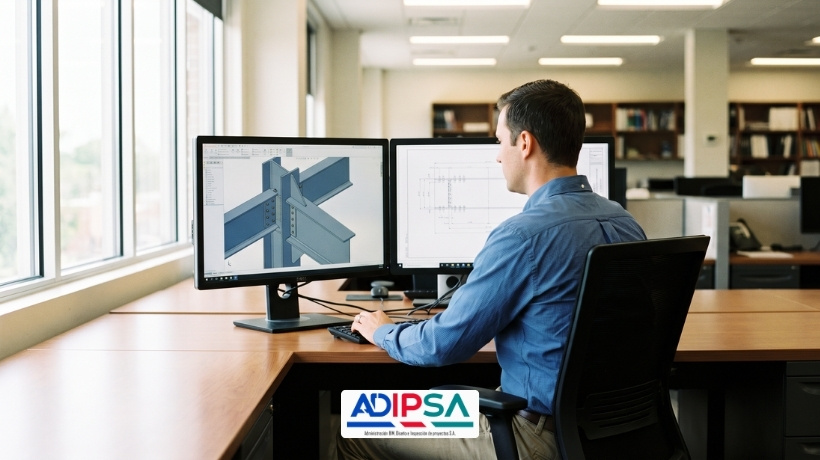
For decades, steel detailing relied on manual drafting, repetitive calculations, and hours spent adjusting connection details by hand. Today, automation software has transformed that reality. Parametric modeling, rule-based connection design, and direct CNC data exchange now allow detailers to produce fabrication-ready documentation faster, with fewer errors, and with far greater consistency across large projects.
For fabricators and contractors evaluating a detailing partner, understanding this shift matters. Automation is not about replacing engineering judgment — it is about giving skilled detailers better tools to deliver precision at scale.
From Manual Drafting to Automated Detailing
Traditional 2D drafting treated every beam, plate, and bolt group as an isolated drawing. Any change to the structural design meant updating dozens of sheets by hand, increasing the risk of inconsistencies between drawings.
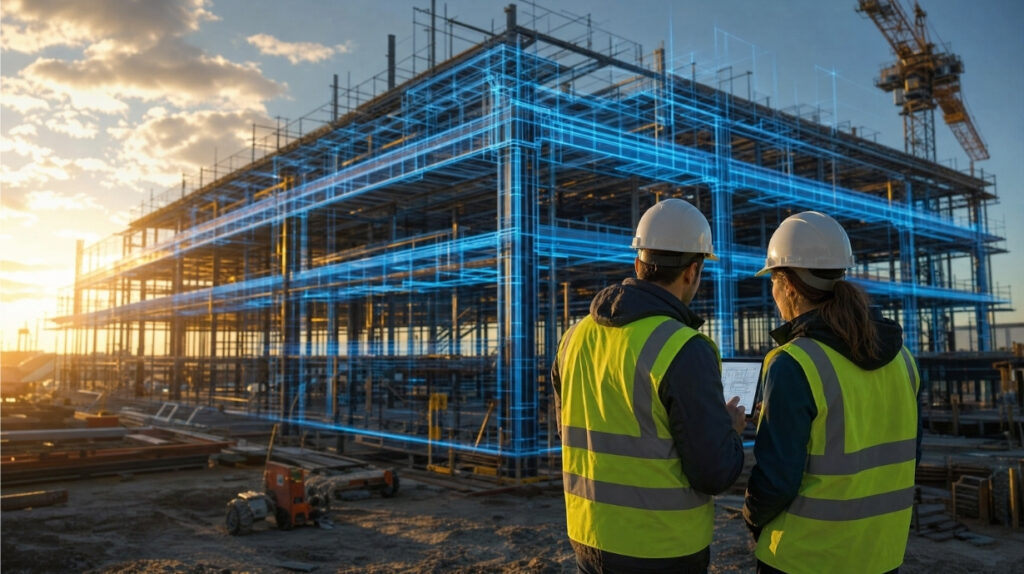
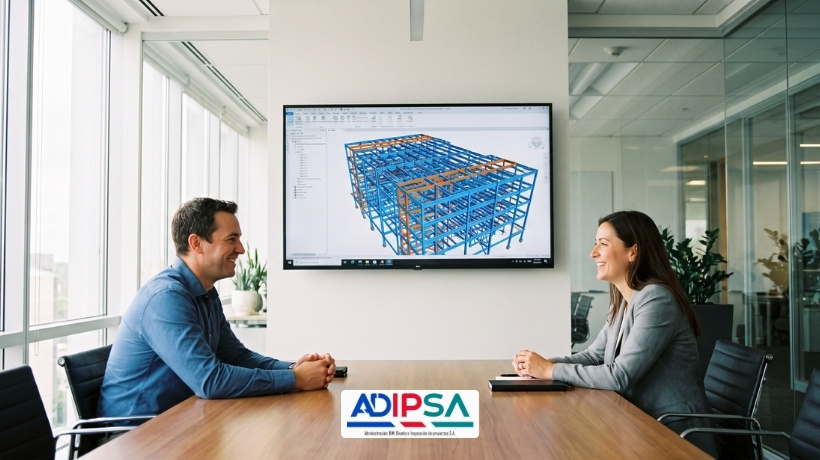
Automated detailing software works differently. Steel members exist as intelligent 3D objects within a single model. Update a beam size or a connection type once, and every dependent drawing, bill of materials, and schedule updates automatically. This single-source-of-truth approach is the foundation of modern steel detailing services.
Key Technologies Driving Steel Detailing Automation
Several tools and capabilities are driving this shift from manual to automated workflows:
- Parametric connection design – Software such as Tekla Structures applies engineering rules to automatically generate bolted and welded connections based on member size, load, and standard, drastically reducing repetitive manual input.
- Automated connection verification – Platforms like IDEA StatiCa run structural checks on every connection in seconds, flagging non-compliant details before they reach the shop floor.
- Direct CNC data export – Detailing models can feed fabrication machinery directly, so beams and plates are cut, drilled, and marked exactly as modeled, with no manual re-interpretation.
- Auto-generated Bills of Materials (BOM) – Material lists, quantities, and labeling update automatically as the model changes, eliminating a historically error-prone manual step.
Combined, these technologies mean that steel detailing within a modern BIM workflow is no longer a documentation task performed after design — it is an active, model-driven engineering process.
Benefits of Automation for Fabricators and Contractors
Automation changes outcomes across the entire fabrication chain, not just the detailer’s workload:
- Faster turnaround – Rule-based connection generation and automatic drawing updates significantly shorten the time between approved design and released shop drawings.
- Fewer fabrication errors – Automated checks catch clashes and non-compliant connections before steel is cut, supporting broader efforts at preventing errors during fabrication.
- Consistency across large projects – On projects with hundreds of repeated connections, automation ensures every instance follows the same validated logic — something manual drafting struggles to guarantee.
- Lower cost of rework – Fewer errors reaching the shop or the field means less wasted material and fewer schedule delays.
Automation and Quality Control: Two Sides of the Same Process
It is a common misconception that automation removes the need for careful review. In practice, the opposite is true. Because software handles repetitive geometric and calculation tasks, detailers can dedicate more time to quality control: verifying constructability, checking coordination with architectural and MEP systems, and confirming that every detail matches the fabricator’s actual capabilities and equipment.
This is also why outsourcing steel detailing to a specialized team often delivers better results than relying on generalist in-house drafting: experienced detailers know how to configure automation rules correctly for each project’s codes, connection types, and fabrication standards.
The Human Expertise Behind the Automation
Software accelerates steel detailing, but it does not replace engineering judgment. Automation rules must be configured correctly, connection logic must reflect real fabrication capabilities, and edge cases — irregular geometries, unusual load paths, tight tolerances — still require an experienced detailer’s review.
On a recent structural steel project, this balance between automated modeling and expert oversight allowed the team to deliver fully coordinated shop drawings without sacrificing accuracy or constructability.
Conclusion
Steel detailing automation is reshaping how shop drawings are produced — faster, more consistent, and with fewer costly errors reaching the fabrication floor. But the real value comes from combining that technology with experienced detailers who know how to apply it correctly to every project’s specific requirements.
Ready to Modernize Your Steel Detailing Process?
Let our team combine advanced automation software with hands-on engineering expertise to deliver fabrication-ready shop drawings for your next project.
📞 Phone: +507 6150-7470
✉️ Email: [email protected]