

BIM coordination guide for modern construction projects explains how clash detection, structured workflows, and project integration reduce risk and improve interdisciplinary coordination. Beyond 3D modeling, BIM coordination represents a structured methodology that aligns architectural, structural, and MEP systems into a unified digital environment, enabling teams to identify conflicts, optimize constructability, and reduce risk before construction begins.
For developers, architects, engineers, and contractors, effective BIM coordination is no longer optional—it is a strategic requirement to control costs, improve schedules, and ensure predictable project outcomes. When implemented correctly, BIM coordination transforms fragmented design efforts into a coordinated, data-driven process that supports informed decision-making throughout the project lifecycle.
This guide provides a comprehensive overview of BIM coordination, explaining how it works, why it matters, and how it integrates with structural design, steel detailing, and rebar detailing in high-performance construction projects.
What Is BIM Coordination? A Practical BIM Coordination Guide
BIM coordination is the process of integrating and aligning digital models from multiple disciplines—architecture, structural engineering, and MEP—within a shared BIM environment. The objective is to ensure that all systems coexist without physical conflicts, design inconsistencies, or constructability issues.
Unlike isolated modeling efforts, BIM coordination emphasizes collaboration, data consistency, and proactive problem-solving. Each discipline contributes its model based on defined standards, allowing conflicts to be detected and resolved digitally rather than on the construction site.
At its core, BIM coordination focuses on:
- Identifying clashes between systems
- Validating spatial relationships
- Ensuring constructability
- Improving interdisciplinary communication
Why BIM Coordination Is Critical in Construction Projects
Construction conflicts are costly. Field modifications, rework, and schedule delays often result from design inconsistencies that could have been resolved earlier. BIM coordination addresses these issues at the design stage, where changes are faster, cheaper, and less disruptive.
Key benefits include:
- Reduced rework and change orders
- Improved cost predictability
- Shorter construction schedules
- Better communication between stakeholders
- Higher design quality and accuracy
For complex projects—such as industrial facilities, hospitals, and large commercial developments—BIM coordination is essential to manage system density and technical constraints.
As a BIM coordination guide, this article focuses on practical workflows that can be applied across commercial, industrial, and institutional projects, especially those developed under U.S. and international standards.
This BIM coordination guide focuses on practical coordination strategies that can be applied across commercial, industrial, and institutional projects.
Clash Detection Explained in BIM Coordination Projects
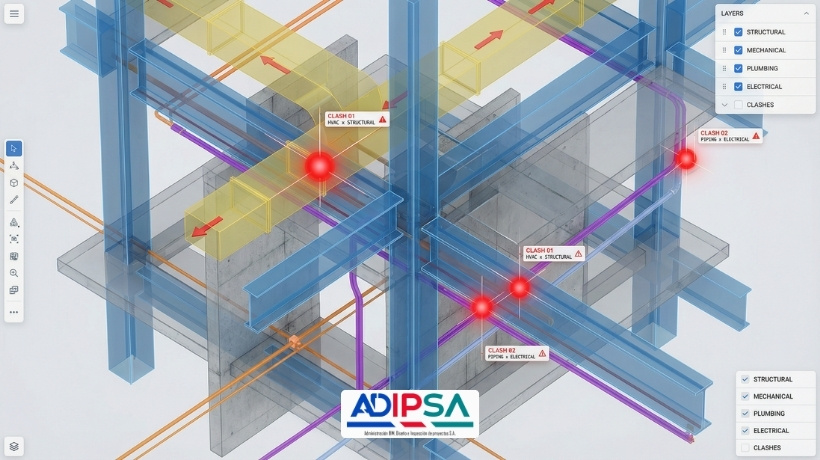
Clash detection is one of the most recognized components of BIM coordination. It involves identifying physical conflicts between building systems, such as:
- Structural elements intersecting MEP systems
- Ductwork clashing with beams or slabs
- Pipe penetrations conflicting with reinforcement layouts
Clashes are categorized to prioritize resolution:
- Hard clashes: Physical overlaps
- Soft clashes: Clearance or access issues
- Workflow clashes: Construction sequencing conflicts
Effective clash detection enables teams to resolve issues digitally, avoiding costly site corrections.
Industry guidelines promoted by organizations such as buildingSMART International provide a global framework for BIM coordination, clash detection workflows, and data consistency across disciplines.
BIM Coordination Guide: Step-by-Step Workflow
A structured BIM coordination workflow typically follows these stages:
1. Model Preparation
Each discipline develops its model according to agreed modeling standards, levels of development (LOD), and coordination requirements.
2. Model Integration
Discipline models are combined into a federated model, enabling cross-disciplinary analysis.
3. Clash Detection and Review
Automated tools are used to detect conflicts, which are reviewed and prioritized by the coordination team.
4. Issue Resolution
Design teams revise their models to address identified issues, ensuring compliance with constructability and design intent.
5. Validation and Approval
Resolved models are reviewed and validated before moving to documentation or construction phases.
This iterative process continues until coordination objectives are achieved.
BIM Coordination Across Disciplines
Structural and Architectural Coordination
Ensures that structural systems support architectural intent without compromising space planning or aesthetics.
Structural and MEP Coordination
Critical for managing penetrations, clearances, and load paths, especially in reinforced concrete and steel structures.
MEP-to-MEP Coordination
Optimizes routing, accessibility, and maintenance zones in congested areas.
The Role of BIM Coordination in Structural Design
BIM coordination enhances structural design by validating spatial feasibility and constructability early in the process. Through coordinated models, structural engineers can assess beam depths, slab thickness constraints, penetration locations, and load transfer paths affected by system routing.
When BIM coordination is aligned with a well-defined structural design workflow, teams are able to optimize structural solutions, reduce redesign cycles, and ensure that architectural and MEP requirements are addressed without compromising performance or safety.
BIM Coordination and Rebar Detailing
Rebar detailing benefits significantly from coordinated BIM models, particularly in reinforced concrete structures with high system density. Accurate coordination ensures proper placement of reinforcement around openings, avoids clashes with embedded elements, and supports clear fabrication-ready documentation.
By integrating BIM coordination with rebar detailing processes, project teams improve accuracy, reduce material waste, and streamline construction workflows—especially in complex slabs, beams, and structural cores.
BIM Coordination and Steel Detailing
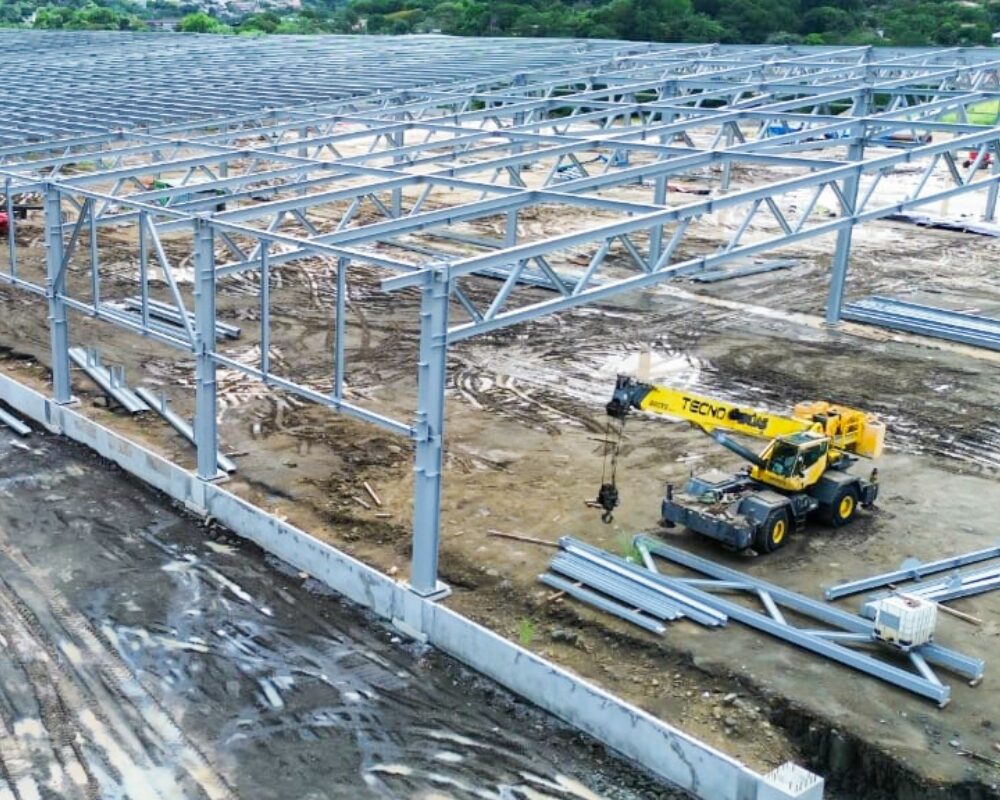
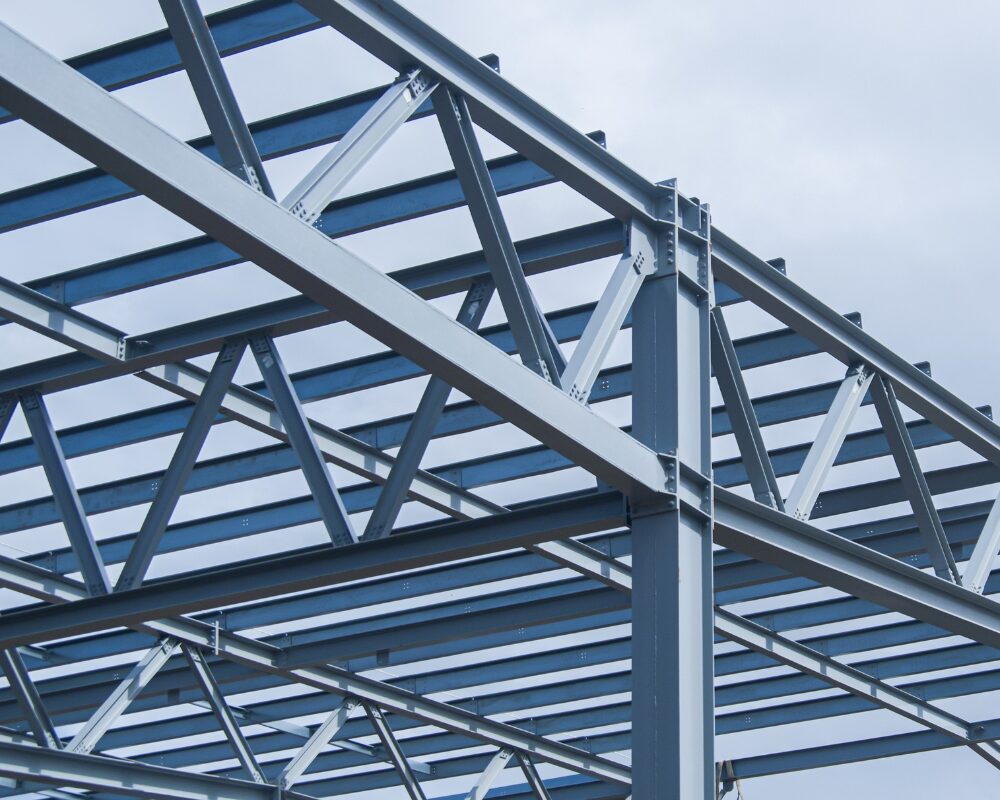
Steel detailing relies heavily on precise coordination between structural steel systems and architectural and MEP components. BIM-based workflows allow teams to validate connection details, confirm erection sequences, and ensure proper alignment between steel members and surrounding systems.
Early BIM coordination combined with steel detailing workflows minimizes fabrication errors, reduces field modifications, and supports efficient steel erection under tight schedules.
BIM Coordination in Design-Build Projects
In design-build delivery methods, BIM coordination plays a central role by enabling real-time collaboration between designers and contractors. This integration supports:
- Faster decision-making
- Early constructability feedback
- Reduced design-development conflicts
Design-build teams leverage BIM coordination to align design intent with construction realities from the outset.
BIM Coordination for Industrial and High-Complexity Projects
Industrial facilities often involve dense systems, heavy equipment, and strict operational requirements. BIM coordination enables:
- Efficient system routing
- Maintenance and access planning
- Safety and compliance validation
These projects demand high levels of precision, making BIM coordination indispensable.
Common BIM Coordination Challenges
Despite its benefits, BIM coordination presents challenges:
- Inconsistent modeling standards
- Poor communication between disciplines
- Late involvement of coordination teams
- Inadequate issue tracking
Successful coordination requires clear processes, defined responsibilities, and experienced BIM leadership.
Best Practices for Effective BIM Coordination
To maximize value:
- Establish coordination standards early
- Define clear roles and responsibilities
- Integrate coordination from early design stages
- Maintain consistent communication
- Use issue tracking and documentation tools
These best practices are core recommendations in any professional BIM coordination guide focused on constructability and risk reduction.
These recommendations reflect proven principles used in any professional BIM coordination guide focused on constructability and risk reduction.
When Should BIM Coordination Start?
BIM coordination should begin as early as possible—ideally during schematic or design development phases. Early coordination:
- Prevents design conflicts
- Supports informed decision-making
- Reduces downstream changes
Waiting until late stages limits the effectiveness of coordination efforts.
BIM Coordination as a Strategic Advantage
Beyond technical benefits, BIM coordination provides a competitive advantage by:
- Enhancing project predictability
- Improving stakeholder confidence
- Supporting risk management
- Demonstrating technical competence
For firms delivering projects under U.S. and international standards, BIM coordination is a critical differentiator.
Conclusion
This BIM coordination guide demonstrates why early coordination, structured workflows, and clash detection are essential for delivering high-performance construction projects. By identifying and resolving conflicts digitally, project teams achieve greater efficiency, accuracy, and predictability.
When aligned with structural design, rebar detailing, and steel detailing workflows, BIM coordination becomes a powerful tool that supports high-performance construction from concept to completion.
For complex projects, early and structured BIM coordination is not just a best practice—it is a necessity for delivering quality outcomes in today’s construction environment.