

As construction projects grow in complexity, identifying conflicts between systems before they reach the field has become essential. BIM clash detection is one of the most effective processes for preventing coordination failures, rework, and costly delays.
Rather than discovering conflicts during installation, clash detection allows project teams to identify and resolve issues digitally—long before construction begins.
In practice, clash detection is most effective when supported by structured BIM coordination methodologies focused on resolving conflicts before construction.
What Is BIM Clash Detection?
BIM clash detection is the process of analyzing federated digital models to identify spatial, functional, or logical conflicts between building systems. These conflicts typically occur where architectural, structural, and MEP components compete for the same physical space.
By running systematic clash detection reviews, teams can detect issues early and resolve them through coordinated design decisions instead of reactive field fixes.
Why Clash Detection Is Critical in Construction Projects
Unresolved clashes are among the most common causes of construction inefficiencies. When conflicts are discovered on-site, they often lead to redesign, material waste, schedule disruptions, and disputes.
Effective clash detection helps:
- Reduce construction rework
- Minimize RFIs and change orders
- Improve schedule reliability
- Protect design intent
- Increase overall project predictability
In complex projects, even minor clashes can cascade into significant delays if not addressed early.
Types of Clashes Identified Through BIM
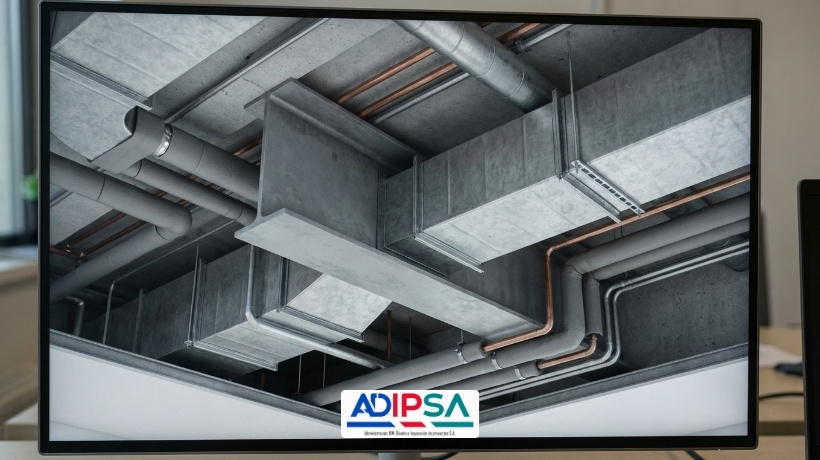
BIM clash view showing physical interference between structural and MEP systems.
Hard Clashes
Hard clashes occur when two or more physical elements occupy the same space. Examples include ducts intersecting with beams or pipes colliding with structural columns. These clashes are typically the easiest to detect and resolve digitally.
Soft Clashes
Soft clashes involve clearance or access requirements rather than direct physical overlap. These may include insufficient maintenance access, inadequate safety clearances, or code-related spacing issues.
Although less obvious than hard clashes, soft clashes can significantly impact constructability and long-term operations.
Workflow and Sequencing Clashes
Workflow clashes arise when construction sequencing or installation logic is not properly coordinated. Even if systems fit spatially, they may be impossible to install in the planned order.
Identifying these conflicts early helps teams adjust sequencing strategies and avoid site-level disruptions.
How Clash Detection Fits into the Coordination Process
Interference detection is not a standalone activity—it is a core component of a structured coordination workflow. Its effectiveness depends on how well it is integrated into the broader coordination strategy.
When embedded within a defined model coordination process, clash detection supports informed decision-making and systematic issue resolution rather than ad hoc fixes.
This topic is part of a broader series on BIM coordination and management practices aimed at reducing construction risk.
Benefits of Early Clash Detection
Running clash detection early in the project lifecycle provides measurable advantages. Issues resolved during design typically cost a fraction of those discovered during construction.
Early detection leads to:
- Faster coordination cycles
- Better alignment between disciplines
- Reduced construction risk
- Improved collaboration among teams
Projects that prioritize early clash detection consistently demonstrate better cost and schedule performance.
Clash Detection in High-Complexity Environments
In dense environments—such as industrial facilities, hospitals, or infrastructure projects—system interactions are highly constrained. In these contexts, clash detection becomes a risk management tool rather than a simple coordination check.
High-complexity projects rely on clash detection to:
- Manage tight tolerances
- Coordinate multiple systems within limited space
- Validate constructability before fabrication
Without systematic clash detection, these projects face elevated execution risk.
To understand how clash detection integrates into the overall process, explore our article detailing the BIM coordination workflow from design to construction.
Final Thoughts
Coordination conflict identification is one of the most valuable applications of BIM-based coordination. By identifying conflicts before construction, teams can shift problem-solving upstream, where changes are less costly and more manageable.
When implemented as part of a structured coordination approach, BIM clash detection becomes a powerful tool for improving constructability, reducing delays, and delivering higher-quality projects.
Industry standards and best practices related to model coordination and clash detection are supported by organizations such as buildingSMART International.